

.png) Contact
Contact .png) Call Us
Call Us .png) Book Online
Book Online in New York & New Jersey







Spinal stenosis can shape daily life in ways that are easy to miss from the outside and exhausting to manage when you are the one living with it.
Ordinary things like standing in line, walking through a store, or getting through the day without constantly adjusting your posture can start to take more effort than they used to. At The Institute for Comprehensive Spine Care, Dr. Okubadejo approaches spinal stenosis treatment in New York and New Jersey with that reality in mind, focusing on where the spinal canal is narrowing, how the spinal cord and nerves are being affected, and which treatment plan makes the most sense for the person in front of him.
Spinal stenosis treatment is the medical and surgical care used to diagnose, manage, and treat spinal stenosis, in which the spinal canal narrows and places pressure on the spinal cord, nerve roots, or nearby nerves. Treatment for spinal stenosis can include physical therapy, injections, pain management techniques, minimally invasive surgery, or spinal fusion, depending on where the narrowing is happening and how severe the symptoms have become.
Spinal stenosis typically involves narrowing in certain parts of the spine. Depending on whether the narrowing is cervical or lumbar, both your diagnosis and treatment can look very different. Some patients struggle with back and neck pain, numbness, balance changes, or weakness, while others experience spinal stenosis pain that shows up most when they stand or walk. The right stenosis treatment starts with an accurate diagnosis, because spinal stenosis depends on location, anatomy, nerve compression, and how much the spinal cord and nerves are being affected.
Diagnosing spinal stenosis at The Institute for Comprehensive Spine Care begins with a detailed conversation about your symptoms, whether it’s pain, numbness, or difficulty walking.
During your initial appointment for spinal stenosis treatment NYC & NJ spine surgeon, Dr. Okubadejo, performs a focused physical examination to assess your range of motion, reflexes, muscle strength, and how certain movements may trigger discomfort. This clinical assessment helps identify whether nerve compression is likely and which part of the spine may be involved. To confirm the diagnosis and determine the extent of narrowing in the spinal canal, we use advanced imaging tools including X-rays, CT scans, and/or MRI scans. X-rays help detect changes in bone structure, while CT scans provide detailed cross-sectional views of both bone and soft tissue. MRI is especially valuable for evaluating the spinal cord, nerves, and discs, giving us a clear picture of where and how the nerve pathways may be affected. With these tools, we’re able to pinpoint the source of your symptoms and build a treatment plan that truly targets the cause.

Spinal stenosis treatment addresses symptoms of spinal stenosis caused when the spinal canal narrows and places pressure on the spinal cord, nerve roots, or surrounding nerves.
Cervical spinal stenosis treatment focuses on narrowing in the cervical spine, where pressure on the spinal cord and nerves can lead to neck pain, arm symptoms, numbness, weakness, and changes in balance or coordination.
Cervical stenosis can raise the stakes quickly because the spinal cord and nerves in this region affect more than local discomfort. Once the cervical spine is involved, symptoms may extend well beyond the neck itself.
Lumbar spinal stenosis treatment focuses on narrowing in the lumbar spine, where pressure on nerve roots can cause low back symptoms, leg pain, weakness, and difficulty standing or walking comfortably.
Lumbar stenosis is one of the most common forms of acquired spinal stenosis and is often tied to the natural aging process, disc herniation, thickened ligaments, bone spurs, and other changes in bone structure or soft tissue.

The benefit of treatment for spinal stenosis is that it gives symptoms structure, direction, and a plan. Once spinal stenosis is diagnosed clearly, care can focus on what is compressing the nerves and what will best relieve pressure while protecting function.
A good candidate for spinal stenosis treatment is someone whose symptoms are persistent, progressive, or clearly interfering with daily life. That includes patients with common symptoms such as pain, numbness, weakness, walking difficulty, or balance changes linked to narrowing in the spinal canal.
Patients should come to the visit prepared to give a complete medical history, including when symptoms started and how they have changed over time. The evaluation typically includes a physical examination focused on reflexes, strength, motion, balance, and gait, so it also helps to bring prior records, such as earlier imaging tests, MRI scans, or surgical notes, when available. A list of current medications, assistive devices, and any physical therapy or pain management treatments already tried can make the visit more productive.
It is also useful to describe how symptoms behave during standing, walking, sitting, and everyday activity, since that helps shape the discussion around whether the next step is conservative care, minimally invasive surgery, or another form of surgical treatment.
The right approach to spinal stenosis treatment depends on several key factors, including where the narrowing occurs, the intensity of your symptoms, your overall health, and how you’ve responded to earlier treatments.
Many patients benefit from non-surgical options that focus on relieving pain, restoring mobility, and supporting a more active, comfortable lifestyle. In more advanced cases - or when conservative care no longer provides relief - surgery may be the most effective next step. At The Institute for Comprehensive Spine Care, Dr. Okubadejo works closely with each patient to create a personalized treatment plan that reflects their specific condition, goals, and long-term well-being.
These treatments focus on conservative and non-invasive approaches to alleviate pain and restore function.
Many patients achieve meaningful relief through non-surgical treatments, making it possible to manage symptoms effectively without surgery.
When surgery is the most appropriate path forward, Dr. Okubadejo brings extensive experience in advanced spinal procedures designed to relieve nerve compression and stabilize the spine.
Every surgical recommendation is made with careful consideration of your condition, overall health, and personal goals. We take the time to walk you through the potential benefits, risks, and expected recovery so you can move forward with clarity and confidence.
Spinal stenosis treatment is performed in stages, beginning with diagnosis and moving into care that matches the anatomy and severity of symptoms. The process is built to identify what is narrowing the spinal canal, how much pressure is affecting the spinal cord and nerves, and what will best relieve that pressure.
Recovery after spinal stenosis treatment depends on whether care is non-surgical or surgical, but the goals stay the same: restore function, relieve pressure, reduce pain, and support a steadier return to daily life. The practice’s approach includes rehabilitation, provider follow-up, and coordination with a physical therapist when rebuilding strength and mobility is part of the plan.
After conservative care, social downtime is often minimal. After surgery, visibility depends on the procedure, pain control, and how quickly walking and daily movement improve.
Non-surgical care often allows activity to continue with some modifications. Surgical recovery takes more structure, especially after decompression or spinal fusion, and restrictions vary by procedure.
Some patients improve with physical therapy and other conservative treatments over a period of weeks. Surgical recovery varies based on the operation performed, but it is often aimed at meaningful, long-term relief.
A good recovery plan usually includes guided movement, rehabilitation, follow-up imaging when needed, and clear expectations around activity. Working with a physical therapist to strengthen core muscles and improve mechanics can be an important part of protecting the result.
Results from spinal stenosis treatment depend on the condition, the severity of nerve compression, and whether care is conservative or surgical. Some patients begin to feel improvement within weeks of starting physical therapy, injections, or other non-surgical treatment options. Others notice clearer gains after surgery as pressure on the nerves settles and recovery progresses.
How long results last depends on what is causing the stenosis, how advanced it is, and which treatment was used. Conservative care can effectively manage symptoms for extended periods, especially when the treatment plan includes physical therapy, pain management, and strategies to protect the spine. Surgical results can also be long-lasting when the source of compression is clearly addressed, and the recovery plan is followed carefully.
Long-term outcomes also depend on the broader condition of the spine. Age-related changes, disc degeneration, spinal conditions, and how well the spine is stabilized all influence what maintenance may look like over time.
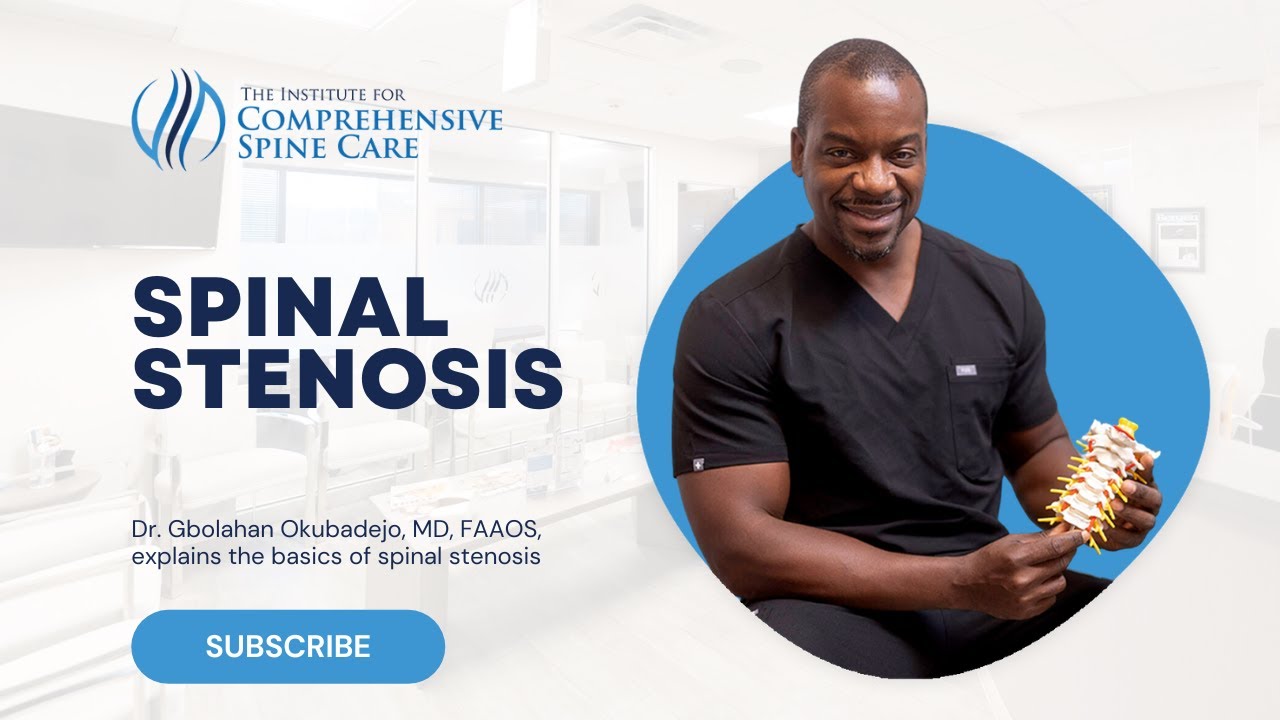

The Institute for Comprehensive Spine Care is built around exactly what this condition asks for: accurate diagnosis, clear treatment planning, and strong follow-through. Dr. Gbolahan Okubadejo, MD, FAAOS, leads a team focused on comprehensive spine care across New York and New Jersey, offering non-surgical treatment options, minimally invasive techniques, and more advanced spine surgery when needed. The practice’s approach is rooted in matching the treatment to the person, whether that means conservative care, endoscopic decompression, spinal fusion, or another surgical path.
Patients also benefit from the practice’s broader perspective. Our goal is to understand how spinal stenosis is affecting your day-to-day life, use the right diagnostic tools to define the problem clearly, and build a personalized treatment plan that supports real function over time.
Call the office or request an appointment online to discuss spinal stenosis treatment in New York and New Jersey.
Symptoms of spinal stenosis can include back and neck pain, numbness, weakness, heaviness in the limbs, trouble walking, balance changes, and pain that improves when sitting or leaning forward. Severe cases can also affect bowel control or bowel function.
Physical therapy is a common part of treatment for spinal stenosis and can help improve mobility, strengthen core muscles, and support better movement patterns. It is often paired with other pain management techniques depending on the severity of symptoms.
Surgery is considered when symptoms are advanced, when nerve compression is significant, or when conservative care no longer provides enough relief. Surgical treatment may include laminectomy, laminotomy, foraminotomy, endoscopic decompression, or spinal fusion.
You cannot always prevent spinal stenosis, especially when it is tied to the natural aging process, fetal development, or acquired spinal stenosis from structural changes over time. Good spine care, movement, and early evaluation can still help reduce strain and catch symptoms earlier.
The cost of spinal stenosis treatment in New York and New Jersey depends on the treatment path. A plan built around physical therapy and injections will look very different from one that includes imaging, minimally invasive surgery, or spinal fusion. Once spinal stenosis is diagnosed clearly, the expected course of treatment becomes easier to outline, including what care is likely to involve and how far the plan needs to go.
Yes. Depending on the anatomy and severity of the condition, spinal stenosis may be treated by spine surgeons and, in some settings, neurological surgeons. At NYNJ Spine, Dr. Okubadejo leads treatment planning within a comprehensive spine care model focused on cervical spine and lumbar spine conditions.